
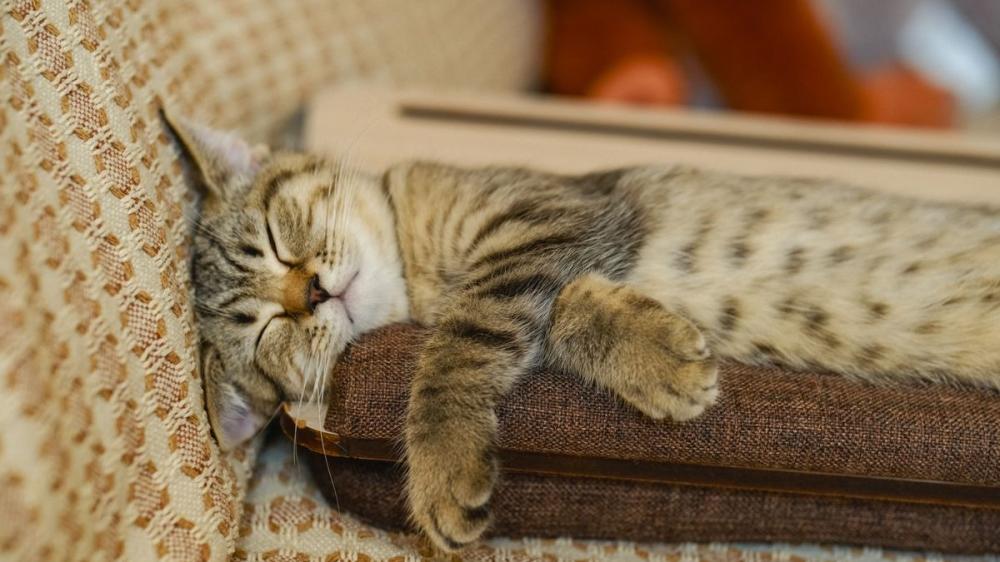
An adult cat usually sleeps 12 to 16 hours a day, and kittens and senior cats can sleep up to 18 hours. This is completely normal behavior. It is not laziness and it is not a sign of illness.
If your cat barely seems to open their eyes during the day, you can usually relax. In this article we explain the numbers by age, why cats sleep so much, and when it is worth paying attention.
Quick summary
- Adult cats sleep about 12 to 16 hours a day, and kittens may sleep even more.
- Much of this sleep is light, and a cat wakes quickly at any sound.
- Activity at dawn and in the evening is natural behavior, and a steady play routine can help manage it.
- A sudden change in sleep time, or sleepiness together with lethargy and loss of appetite, is a reason to talk to your vet.
Normal Cat Sleep by Age
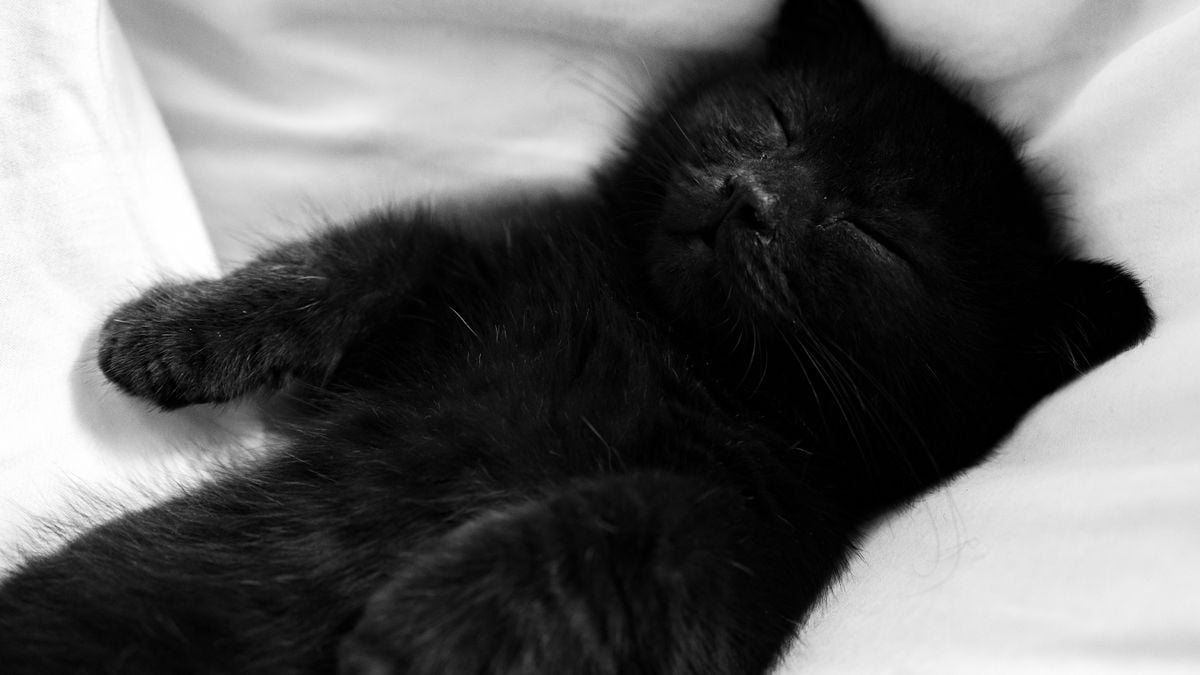
Sleep hours vary from one life stage to another. These numbers are approximate, and every cat has their own personality:
- Kittens (up to 3 months): may sleep about 18 to 20 hours, because their bodies are growing fast.
- Adults (1 to 7 years): about 12 to 16 hours.
- Senior cats: often more than 16 hours, with calmer behavior and less movement.
Don't worry if your cat sleeps a little less or a little more than these numbers. What matters is that it stays within their usual habits and that they are energetic when awake.
Why Do Cats Sleep So Much?
Cats are hunters by origin, and hunting uses a great deal of energy in short bursts of pouncing and chasing. So a cat saves energy by sleeping between periods of activity.
Other reasons add to this:
- Energy: even house cats keep this instinct, so they sleep to be ready for sudden play.
- Digestion: protein-rich meals call for a calm body afterward.
- Security: a cat who feels safe at home sleeps deeply and comfortably.
- Boredom: sometimes a cat sleeps because there is nothing else to do, not because they are tired.
Light Sleep and Deep Sleep in Cats
Not all of a cat's sleep is deep sleep. Most of what they spend on "catnaps" is light sleep, during which their ears keep turning toward sounds and they wake in an instant.
Deep sleep takes up less time. During it you may see your cat blink, or twitch their whiskers or paws. This is similar to dreaming in humans and is nothing to worry about.
Don't wake a cat in this state unless you need to, because deep sleep is important for their rest.
Why Is Your Cat Active at Dawn and at Night?
Cats are most active at dawn and at dusk, which is known as crepuscular activity. That is why your cat may wake you before sunrise by running around or meowing.
This does not mean something is wrong. They are simply following their internal clock. You can ease it with a few simple steps:
- Play with your cat for 10 to 15 minutes before bed using a toy that imitates hunting.
- Offer a light meal right after play.
- Keep this routine at around the same time every day.
- Don't reward early-morning meowing with food, so it doesn't become a habit.
If your cat tends to get overexcited after play, you may also find it useful to read catnip for cats and how to use it safely as a way to vary playtime.
Why Do Cats Take Different Sleeping Positions?
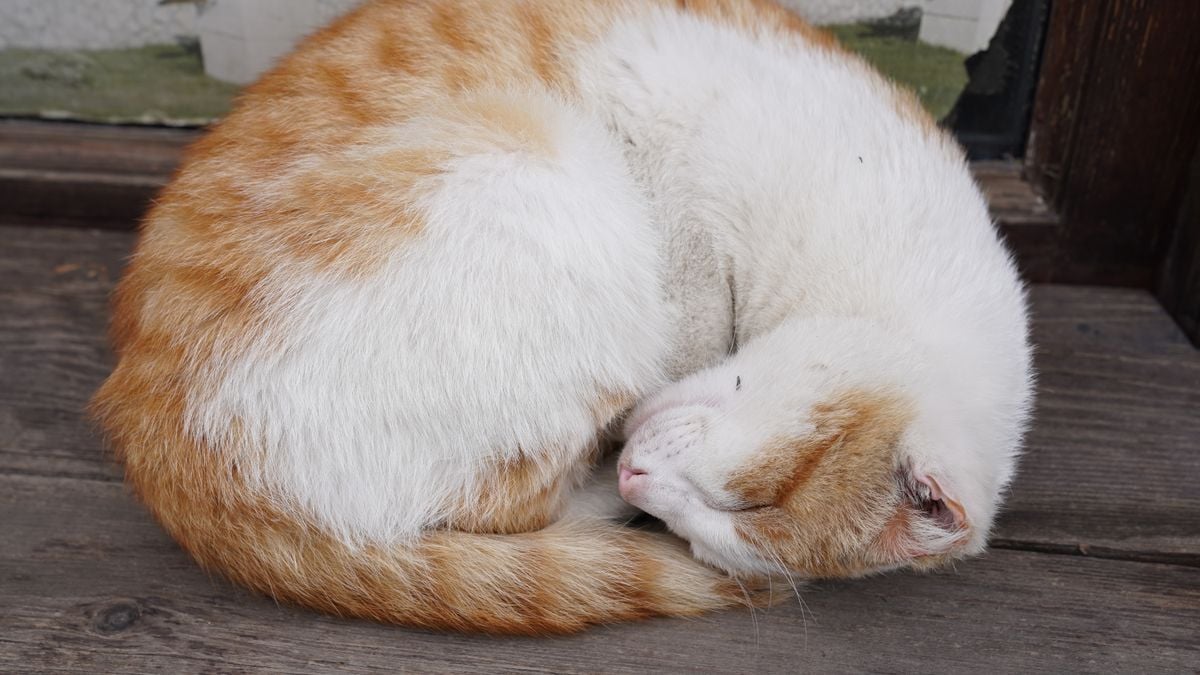
A cat's sleeping positions say a lot about how they feel:
- Curled in a ball: keeps them warm and protects their organs. Common in cold weather or when a cat is feeling cautious.
- Lying on their back: usually a sign of trust and complete comfort in the space.
- Crouched, ready to pounce: dozing while sitting, and staying ready to jump quickly.
- Stretched out on their side: relaxed sleep in a warm, safe spot.
Cats prefer high or slightly hidden places, such as shelves, boxes and quiet corners, because these give them a wide view and a sense of security.
How to Create a Comfortable Sleeping Spot for Your Cat
A good sleeping environment helps your cat sleep more deeply and calmly. Try these simple ideas:
- Place a soft bed or blanket in a quiet corner away from noise.
- Offer more than one sleeping spot, one of them high and another close to family members.
- Keep the spot warm in winter and shaded in summer.
- Keep the litter box and food bowl a little way from the sleeping area.
At Cute Cat, we find that most cat owners only need a steady, comfortable corner to improve their cat's sleep habits. You can browse suitable cat beds and supplies below.
When Is Your Cat's Sleep a Sign to Watch?
Long sleep is normal, but a sudden change in your cat's habits is what deserves attention. Take notice if you see any of the following:
- Sleeping much more than usual for several days in a row.
- Lethargy together with loss of appetite or refusing to drink.
- Constant hiding and not responding to you the way they used to.
- Fast or labored breathing during sleep.
- Showing less interest in playing or jumping than before.
We are not diagnosing any particular condition here, as the causes are many and some are simple. But if you notice any of the signs above, consult your veterinarian. For more on symptoms and when to see a vet, see our guide to cat diseases and treatment.
Remember that senior cats need more regular check-ups. Their sleep hours may naturally increase, but regular exams give you peace of mind.
Related Articles
- Catnip for Cats: How It Affects Your Cat and How to Use It Safely
- Cat Food: The Complete Guide to Feeding Your Cat from Kitten to Senior
- Cat Medications: Your Complete Guide to Veterinary Pharmacy and Safe Use
- Cat Surgery and Tests: The Complete Guide Before and After the Procedure
Frequently Asked Questions
Is it normal for my cat to sleep all day?
Yes, in most cases. As long as your cat eats, drinks and plays when awake, daytime sleep is part of their nature.
How many hours does a kitten sleep?
A kitten may sleep 18 to 20 hours a day in the first weeks, and this gradually decreases as they grow.
Do cats sleep more in winter?
They may. Cats tend to look for warmth and comfort in cold weather. This is not a problem as long as their activity and appetite are normal.
Why does my cat wake me up at night?
Because cats are usually active at dawn and in the evening. Playing before bed and keeping mealtimes consistent can reduce this habit.
Should I wake my sleeping cat to play?
It is best not to, unless there is a need. Let them sleep, then play with them when they wake up and seem energetic.
Sleep is a key part of a cat's health and behavior, and knowing the normal range helps you spot any change early. If you want to set up a comfortable corner for your cat, browse cat supplies at Cute Cat and choose what suits your cat and your home.